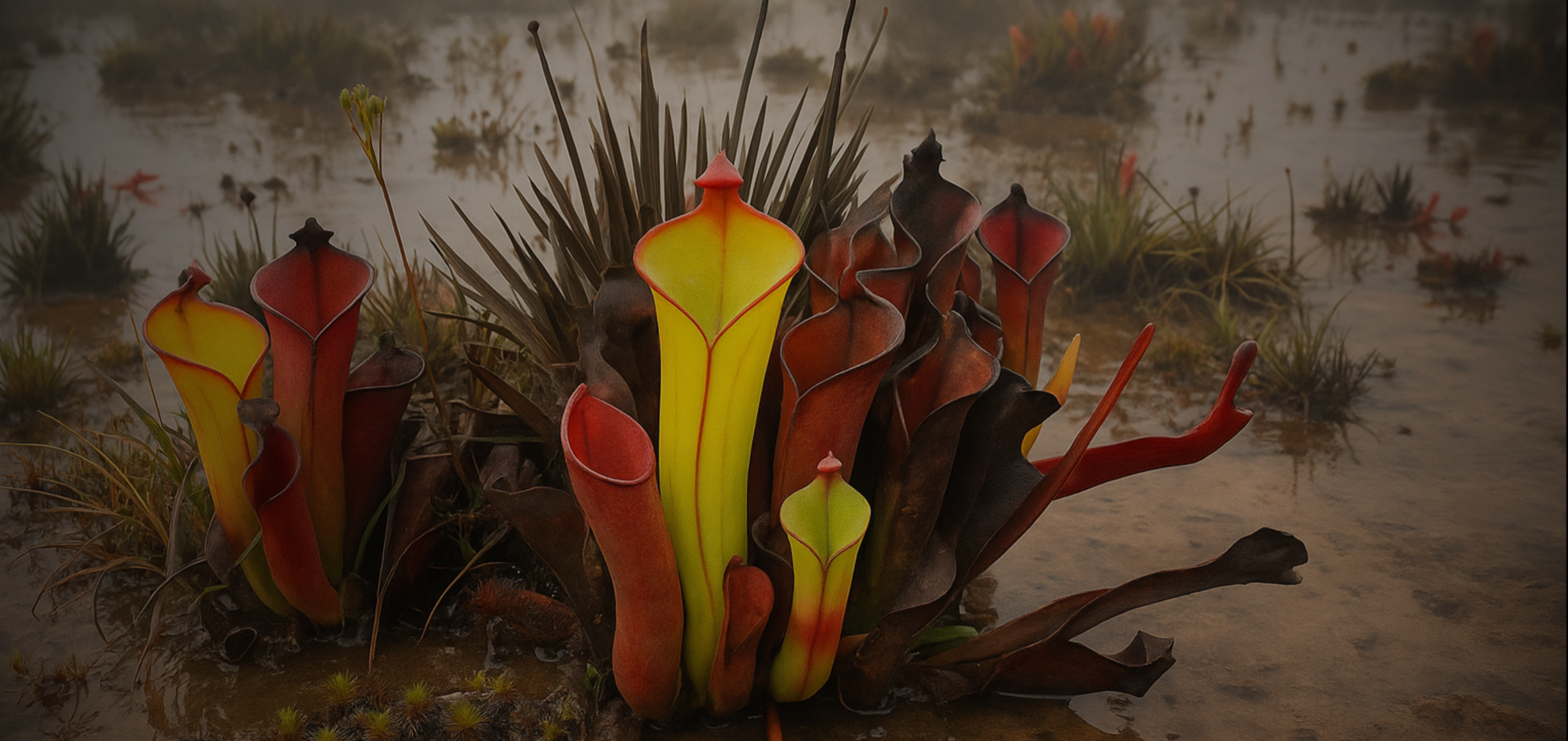
HELIAMPHORA
the crown jewels of the Tepuis, rare and sculptural plants that reward patience with unmatched beauty.
About Heliamphora
(hee-lee-am-FER-uh) • ‘The Marsh Pitcher‘
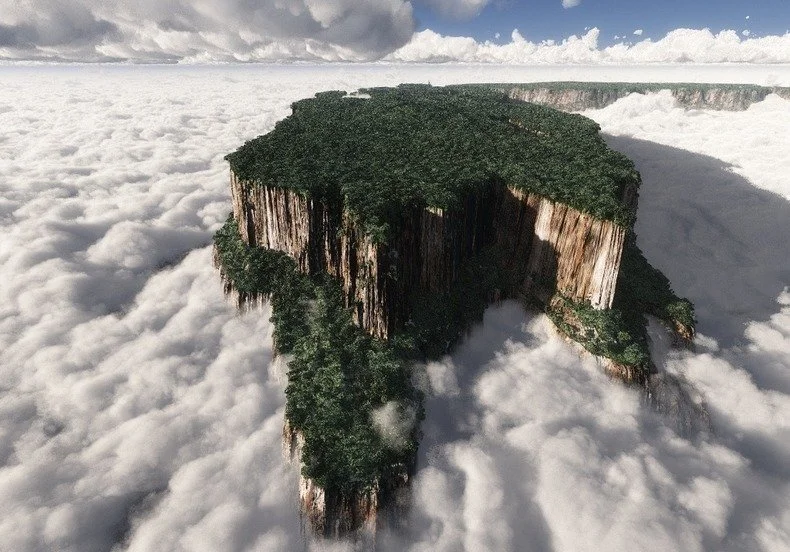
High in the remote highlands of Venezuela, Guyana, and northern Brazil, ancient sandstone plateaus rise sharply from the rainforest below.
These are the Tepuis — colossal table-top mountains formed over two billion years ago and isolated for millennia.
Their summits, perched between 1,500 and 3,000 metres, lie cloaked in perpetual cloud and mist. Rain falls almost daily, sunlight breaks only in fleeting bursts, and the air hums with constant moisture.
Here, amid carpets of moss and orchids, grows one of the world’s most remarkable survivors — Heliamphora, the Marsh Pitcher.
First discovered in 1838 on Mount Roraima by explorer Robert Schomburgk, Heliamphora remained a mystery for decades. Botanists eventually realised these ethereal, vase-shaped plants represented a lineage of carnivorous species perfectly adapted to life on the Tepui summits — a place where few others endure.
The name Heliamphora finds its roots in the Greek helos (marsh) and amphora (vessel), meaning “marsh pitcher.”
It is a fitting name for plants sculpted by water, light, and time — elegant, slow-growing, and profoundly otherworldly.
Their glowing, sculptural forms and rhythmic growth have earned them a reputation as the crown jewels of the carnivorous world.
But more than that, they are a living connection to one of Earth’s last untouched frontiers — the mist-shrouded plateaus of the Guiana Highlands, where the ancient meets the eternal.
They’re not just plants; they’re a connection to one of Earth’s last untouched frontiers.
Natural Habitat—Islands in the Sky
High above the Amazon rainforest, the Tepui mountains rise like islands in the sky — sheer-walled plateaus that pierce the clouds of Venezuela, Guyana, and northern Brazil.
These ancient summits, formed more than two billion years ago, are among the oldest landscapes on Earth, their isolation creating a world both haunting and beautiful.
Here, the air is cool and thin, and the soil — a fragile mix of quartz sand and sphagnum moss — is almost devoid of nutrients. Constant rainfall and thick mist keep the ground soaked, while sunlight filters through clouds in shifting ribbons of gold and grey. Humidity clings to everything; temperatures hover gently between 10 and 25 °C, and nights bring the crisp chill of altitude.
At elevations between 1,500 and 2,800 metres, Heliamphora flourish where few other plants can. The constant wash of pure rainwater and the near-absence of minerals have shaped them into masters of adaptation — patient, slow-growing hunters that thrive on purity itself.
Every Tepui summit is its own world:
Auyán Tepui – home to elegant species like H. minor and the towering H. ionasi.
Chimantá Massif – a vast labyrinth of ridges and valleys sheltering diverse hybrids and rare endemics.
Cerro de la Neblina – drenched in perpetual cloud, host to H. neblinae and H. ceracea.
Cerro Duida & Akopán Tepui – remote plateaus where H. macdonaldae and H. akopana glow crimson in the mist.
Separated by cliffs, distance, and time, these isolated ecosystems are living laboratories of evolution.
To stand among them is to feel the world before time — a silence broken only by wind, rain, and the slow, patient rhythm of plants that have made survival an art form.
Diversity & Discovery
To this day, Heliamphora remains one of the least explored genera of carnivorous plants.
Each species is confined to a handful of Tepui summits across the Guiana Highlands of Venezuela, Guyana, and northern Brazil — places so isolated that even neighbouring mountains may host entirely different species.
As of today, around 23 species have been formally described, with several others still awaiting classification. New discoveries continue as botanists scale unexplored plateaus, reminding us that much of this ancient world is still hidden in the mist.
Below is the most up-to-date record of the recognised species of Heliamphora:
Heliamphora arenicola – found on the sandstone slopes of the eastern Tepuis of Venezuela
Heliamphora ceracea – native to the Neblina region, known for its waxy, glossy pitchers
Heliamphora chimantensis – restricted to the Chimantá Massif, Venezuela
Heliamphora ciliata – identified by its fine, hair-like fringes along the pitcher margin
Heliamphora collina – a mid-elevation species from Gran Sabana plateaus
Heliamphora elongata – tall, slender pitchers from the Auyán Tepui area
Heliamphora exappendiculata – lacking the characteristic nectar spoon, adapted to constant rainfall
Heliamphora folliculata – features bulbous pitcher bases and grows in exposed Tepui summits
Heliamphora glabra – smooth, green forms from the Chimantá Massif
Heliamphora heterodoxa – a variable, wide-ranging species bridging several Tepuis
Heliamphora hispida – known for its fine hairs and compact growth from Cerro Neblina
Heliamphora huberi – discovered on the Ilu–Tramen Massif, showing transitional features
Heliamphora ionasi – one of the giants, with pitchers exceeding 40 cm, from Auyán Tepui
Heliamphora macdonaldae – a spectacular, rare species from Cerro Duida, with flaring red rims
Heliamphora minor – a compact, elegant species from Auyán and Chimantá Tepuis
Heliamphora neblinae – native to Cerro de la Neblina, thriving in persistent cloud and rain
Heliamphora nutans – the first species described; a true icon of Mount Roraima
Heliamphora parva – small, delicate pitchers often forming dense colonies on wet slopes
Heliamphora pulchella – one of the most widespread, with variable colour forms and hybrids
Heliamphora purpurascens – vivid burgundy tones, found on the Chimantá Massif
Heliamphora sarracenioides – with broad, flaring mouths reminiscent of Sarracenia
Heliamphora tatei – tall, slender forms reaching over 50 cm on Cerro Duida and neighbouring Tepuis
Heliamphora uncinata – remarkable for its hooked nectar spoon and translucent body
Here are the known yet-to-be described (incompletely diagnosed) taxa for the genus Heliamphora, along with some of their distinguishing traits:
Heliamphora sp. 'Akopán Tepui' (Venezuela – at about 1,800-1,900 m). This taxon resembles H. heterodoxa but has broader pitchers and a smaller nectar-spoon.
Heliamphora sp. 'Angasima Tepui' (Venezuela – at about 2,200-2,250 m). This taxon is distinguished by numerous nectar glands on the outer pitcher surface, a smaller nectar-spoon than related species, and large clumps up to ~1.5 m across
Scientists continue to document new and intermediate forms across isolated Tepuis, and at least two additional taxa remain undescribed. As exploration continues, the true diversity of Heliamphora is still unfolding..
Beyond the recognised species, there are also countless natural and cultivated hybrids, many of them spectacular in colour and structure. These hybrids often combine the best traits of their parent species, showcasing the incredible diversity and adaptability that make Heliamphora one of the most captivating plant groups on Earth.
Adaptations to a Harsh World
The Tepui environment is breathtaking but unforgiving.
Thin, ancient soils hold almost no nitrogen or phosphorus, forcing Heliamphora to evolve a different strategy — carnivory.
Over millions of years, these plants transformed their leaves into elegant traps that turn rainfall, sunlight, and chance into survival.
Each leaf becomes a graceful tubular pitcher, a natural vessel that fills with rainwater. A small slit along its side allows overflow, preventing flooding during torrential downpours. Above it sits the nectar spoon — a curved, translucent flap that secretes sweet droplets to lure passing insects while also directing excess rain away from the trap.
Unlike Nepenthes or Sarracenia, most Heliamphora species rely not on digestive enzymes but on a community of bacteria and symbiotic protozoa living within the pitcher fluid to decompose their prey. It’s a quiet partnership — slow, efficient, and refined by isolation.
Many species develop deep red pigmentation to protect against intense UV radiation and to blend into the crimson sphagnum moss that carpets their world.
Their slow growth rate, shaped by cool temperatures and meagre nutrition, mirrors the pace of the Tepui itself — patient, enduring, and timeless.
Anatomy and Function
Each Heliamphora pitcher is a masterpiece of design, sculpted by wind, water, and time. The leaves transform into graceful, tubular vessels that collect the purest rainwater, forming gentle traps that glimmer beneath the mist. Along the smooth inner walls, faint hairs guide insects downward, while a narrow slit on the side allows overflow to drain away during heavy rain — a small but vital adaptation in a world that never dries.
Above each pitcher, a nectar spoon rises like a sculpted crown — glistening in the light, guiding water, and luring prey with droplets of sweetness. Each spoon is both a lure and a signal, reflecting the soft glow of the Tepui sun, hinting at nourishment within.
The plants grow in tight rosettes that gradually expand into dense clumps, their rhythm slow and deliberate. From these rosettes rise tall, slender stalks carrying delicate white or pink flowers, which sway gently above the pitchers to keep pollinators safe from their traps below. Beneath the surface, short, wiry roots anchor them into moss and sand — not to draw nutrients, but to hold steady against wind and rain.
Their symmetry, texture, and subtle sheen make them feel crafted rather than grown — living sculptures shaped by the elements, enduring remnants of a world that still breathes above the clouds.
Reproduction and Flowers
When the clouds part and sunlight touches the Tepui summits, Heliamphora enters a quiet rhythm of renewal.
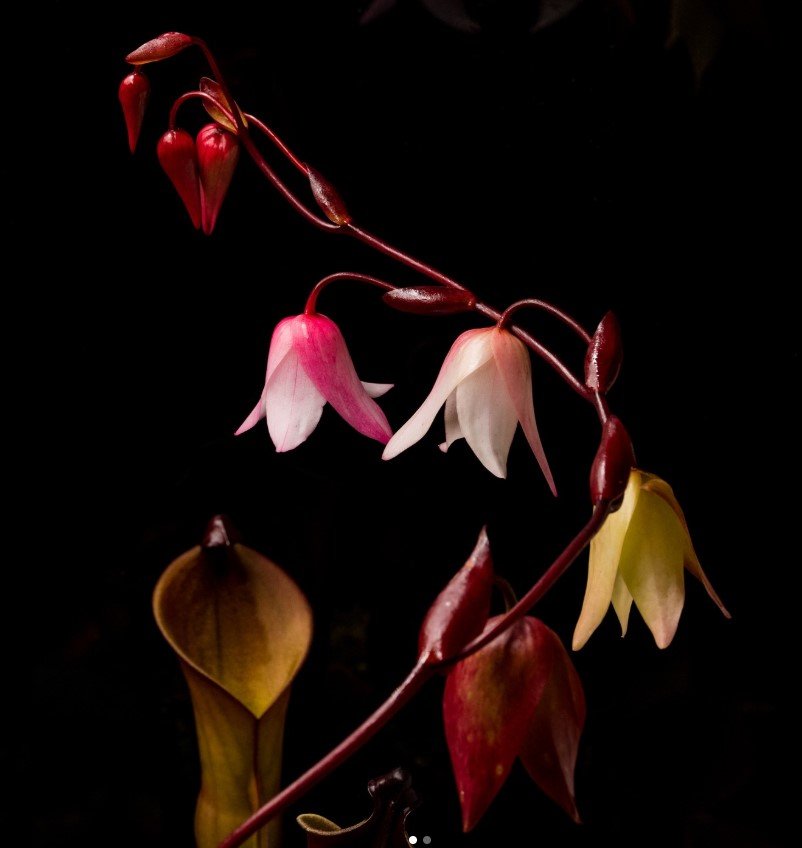
Slender stalks rise above the pitchers, carrying delicate white or soft pink flowers that sway gently in the wind.
The blooms are positioned high above the traps to protect their pollinators — small bees and flies — from becoming victims of the plant’s own design.
In the wild, pollination depends on a remarkably specific interaction.
Heliamphora flowers hold their pollen tightly within their anthers, releasing it only when exposed to vibrations at a particular frequency — a technique known as buzz pollination.
Native bees visiting the Tepui summits create these vibrations with their flight muscles, triggering a fine golden dusting of pollen to emerge.
In cultivation, replicating this natural process is extremely difficult.
Without the precise frequency or a skilled grower’s intervention, pollen rarely releases, making seed production in captivity both rare and prized.
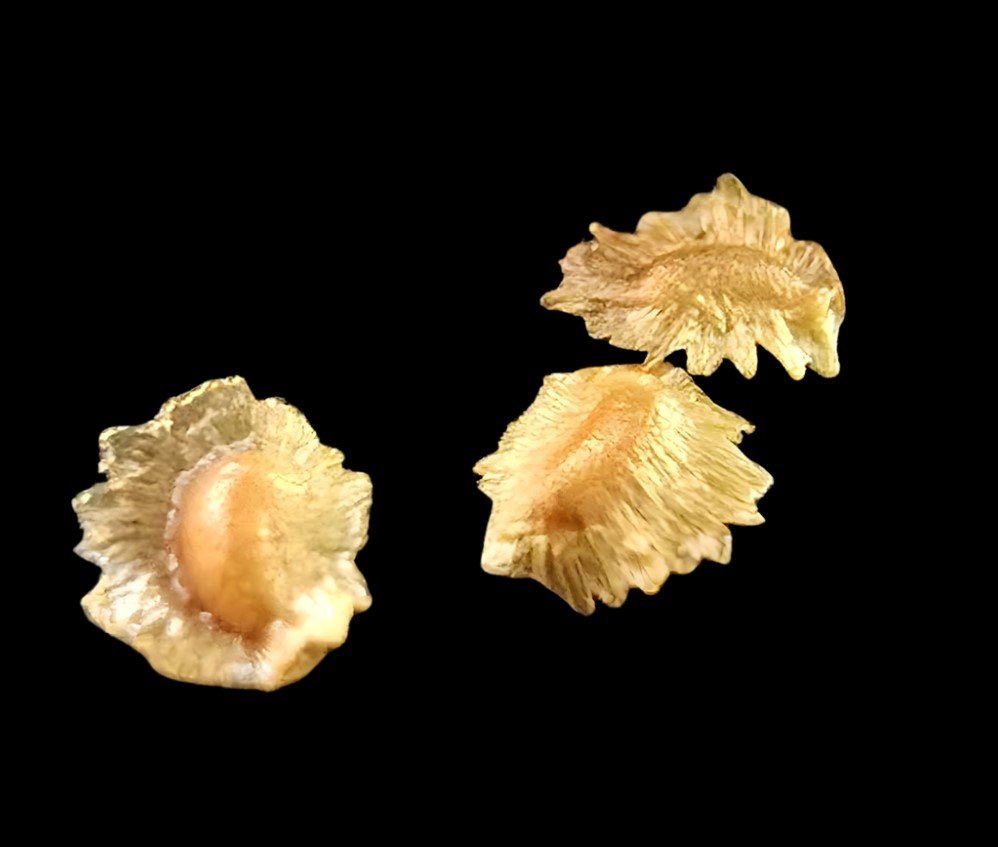
After pollination, capsules form and split open, releasing clouds of tiny, dust-like seeds.
Carried by wind or mist, these seeds drift across the rocky plateaus — sometimes landing on new slopes, sometimes lost forever.
Each successful germination marks another quiet victory in a landscape that rarely forgives.
Propagation in Cultivation
In the wild, the Tepui summits are so isolated that only a few Heliamphora species ever meet.
Where they do, however, nature’s imagination takes over — and natural hybrids emerge, each blending traits of its parents into new and often spectacular forms.
These hybrids occur where species overlap on shared plateaus such as the Chimantá Massif or Auyán Tepui.
The result is an ever-shifting tapestry of shapes and colours: pitchers with flared red lips, intermediate nectar spoons, or intricate speckling that reflects both lineages in perfect balance.
Because the Tepuis are difficult to reach, many of these hybrids are still unnamed or known only from a handful of field photographs. In cultivation, growers have continued nature’s work — carefully crossing species such as H. folliculata × minor or H. sarracenioides × purpurascens, producing plants that capture the elegance of the wild with the stability of greenhouse care.
However, successful hybridisation outside of nature remains uncommon. Heliamphora are still scarce in private collections, and extracting viable pollen can be challenging — it is only released when the anthers are exposed to specific vibration frequencies, a process usually triggered by insects in the wild. To create new hybrids, growers need a sizeable and mature collection, improving the odds of overlapping blooms and usable pollen — something often achieved only through teamwork with other collectors.
From seed, Heliamphora test the patience of even the most devoted grower. Germination can take several months, and it may be five to eight years before a seedling matures into a fully formed, flowering plant. Each new hybrid is therefore a long-term labour of love — a slow conversation between grower and nature.
Every one of these crosses is a living experiment, revealing how adaptable the genus truly is — proof that even in Earth’s oldest landscapes, evolution never stops unfolding
Propagation in Cultivation
In cultivation, Heliamphora are most commonly propagated through rhizome division, a slow and careful process that mirrors their growth in the wild. As mature clumps expand, their underground stems branch naturally, forming offsets that can be gently separated and encouraged to root. Each division represents years of patient growth — a careful conversation between grower and plant.
Seed propagation is possible but demands exceptional timing and precision. Because pollen is only released through vibration at specific frequencies — a mechanism triggered by native insects in the Tepuis — successful pollination in cultivation is technically difficult. Growers with larger collections or those who collaborate with others stand the best chance of producing viable seed.
When achieved, germination is slow, often taking several months, and plants may require five to eight years to reach maturity. But for those who persist, the reward is extraordinary — each seedling a unique expression of the Tepui world, shaped by patience, skill, and respect for nature’s pace.
To grow Heliamphora is to work in time with the mountains themselves — slow, deliberate, and endlessly humbling.
Why They Are Unique
Each species of Heliamphora tells a story written in mist and stone. Separated by sheer cliffs and endless rainforest, these plants evolved in solitude — each Tepui shaping its own distinct species, sculpted by isolation and time. What began as one lineage became many, each with its own rhythm, form, and colour — living testaments to evolution unfolding above the clouds.
Their world is one of extremes: pure rain, thin soil, relentless wind. In such a place, survival itself is a triumph — and Heliamphora stand as symbols of endurance, plants that have persisted for millions of years on mountaintops older than the Amazon beneath them.
To grow one is to keep a fragment of that forgotten realm alive — a living echo of rain and silence, of stone wrapped in cloud.
Each pitcher is more than a plant; it’s a window into an ancient world that still whispers across the Tepui summits.
Ecological Role
Though born of scarcity, Heliamphora play a gentle and essential role in the delicate ecosystems of the Tepui summits. Their elegant pitchers do more than trap insects — they cradle tiny worlds of life within their rain-filled chambers. Here, insect larvae, protozoa, and bacteria thrive together, forming intricate micro-ecosystems that transform each pitcher into a living community suspended above the clouds.
Within these miniature pools, life feeds life in perfect balance. The plant offers shelter and water; its guests return the favour by helping to break down captured prey, releasing nutrients back into the system. It’s a quiet collaboration, one that blurs the line between predator and provider, between hunter and host.
In these isolated realms — where the soil is ancient and the wind carries whispers from another age — Heliamphora embody harmony through adaptation.
They remind us that even in the harshest, most secluded environments, life doesn’t just compete; it cooperates, weaving together survival and grace high above the world below.
Conservation
High above the rainforest, Heliamphora endure in some of the most remote and fragile ecosystems on Earth. Their entire existence is confined to a scattering of Tepui summits — ancient plateaus rising from the mist, each a self-contained world of evolution. Because many species live on a single mountain, the loss or disturbance of even one habitat can erase them completely.
Though the Tepuis seem eternal, they are not immune. Climate change is altering rainfall patterns, raising temperatures, and slowly reshaping the delicate balance these plants depend on. Illegal collection and habitat disturbance add further pressure, threatening species that have survived in isolation for millions of years.
Yet there is still hope in human hands. Researchers, conservation groups, and passionate growers (like Flora Quest) now work together to protect, propagate, and preserve these remarkable plants. Through careful cultivation, seed sharing, and tissue culture, Heliamphora are being secured for future generations — grown not for exploitation, but for understanding and admiration.
Each cultivated plant represents more than beauty; it is a living link to an ancient world, a safeguard against loss, and a quiet act of preservation for life that once seemed untouchable..