 Image 1 of 2
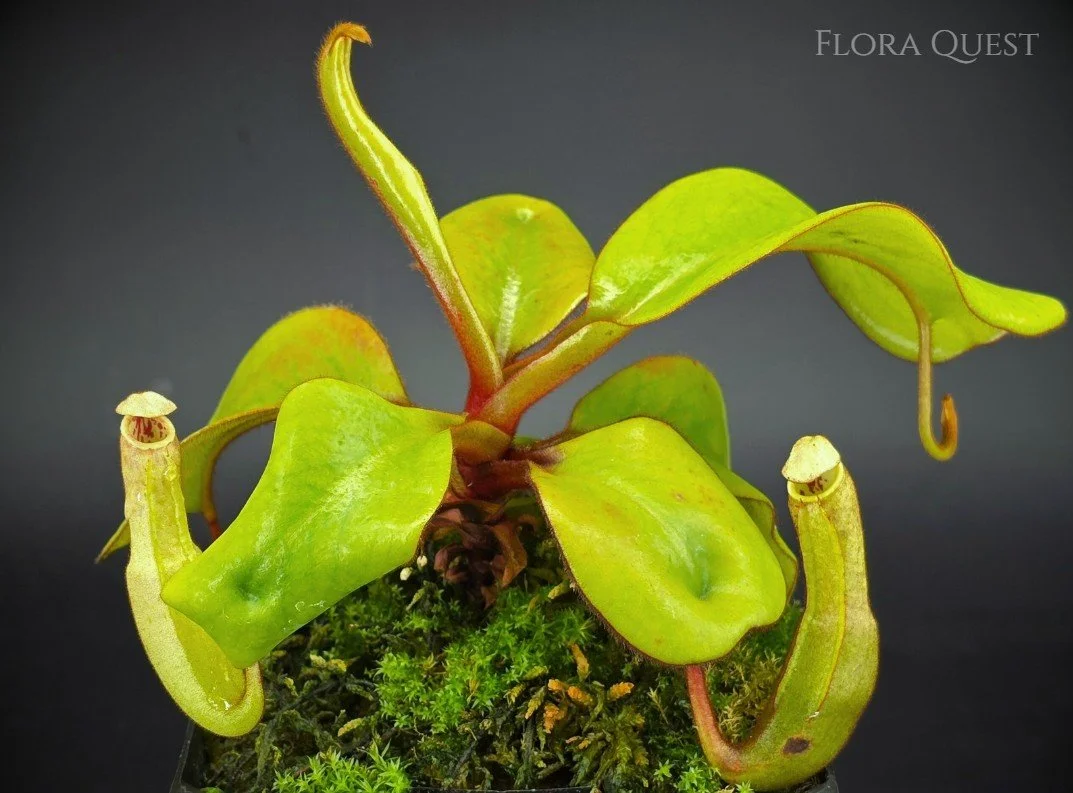 Image 2 of 2
Released in limited numbers. Total Batch Remaining QTY 10
Nepenthes clipeata is one of the most recognisable and critically rare Nepenthes species ever described. Endemic to a single mountain in Borneo and long extinct in the wild, it holds an almost legendary status among collectors.
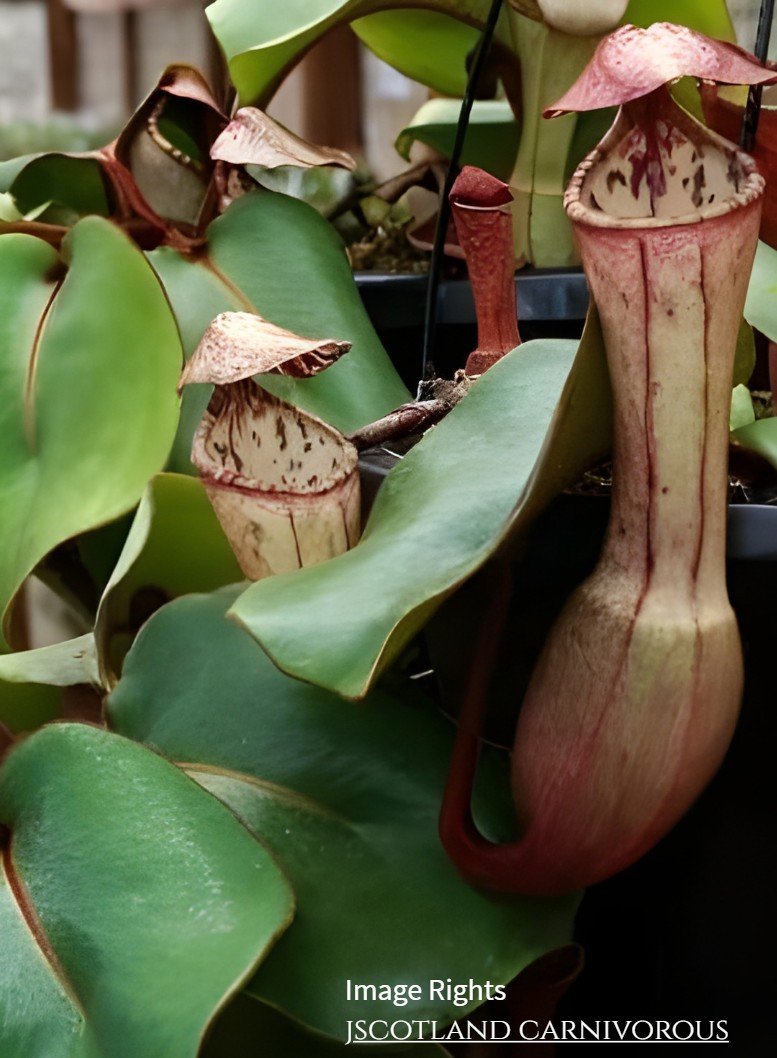
What makes clipeata so special isn’t just its rarity — it’s the pitchers themselves. Broad, shield-like traps with thick walls, deep red to bronze tones, and a wide, gently flared peristome give this species a weight and presence unlike any other. The overall look is bold yet elegant, with a sculptural quality that immediately sets it apart.
This is not a fast or flashy plant. It’s one that rewards patience, stability, and careful growing, slowly developing pitchers with increasing depth of colour, form, and character as it matures.
A True Icon:
Few Nepenthes are as instantly recognisable or as historically important as clipeata.
Unique Pitcher Shape:
Broad, shield-like pitchers with thick walls and strong visual weight.
Rich, Mature Colouration:
Deep reds, bronzes, and earthy tones that intensify with age and good light.
Collector Significance:
A plant grown not just for beauty, but for its place in Nepenthes history.
Extremely Limited Availability:
Offered only occasionally and in very small numbers.
Under optimal conditions and with maturity, pitchers may reach approximately 15–25 cm.
Actual size will vary depending on growing environment, plant age, and individual genetics.
Difficulty: Advanced (Lowland to Intermediate Environment)
Bright, diffused light · 75–85% humidity · Day 24–30 °C / Night 18 °C + · Pure water preferred (RO or rainwater)
View the full Nepenthes Care Guide
Each plant displays natural variation. Individual specimens may differ in colour, patterning, and pitcher shape depending on growing conditions and maturity.
Temperature and humidity ranges are guidelines only. These plants can tolerate short periods outside the ideal range, provided conditions return to stable levels.
Released in limited numbers. Total Batch Remaining QTY 10
Nepenthes clipeata is one of the most recognisable and critically rare Nepenthes species ever described. Endemic to a single mountain in Borneo and long extinct in the wild, it holds an almost legendary status among collectors.
What makes clipeata so special isn’t just its rarity — it’s the pitchers themselves. Broad, shield-like traps with thick walls, deep red to bronze tones, and a wide, gently flared peristome give this species a weight and presence unlike any other. The overall look is bold yet elegant, with a sculptural quality that immediately sets it apart.
This is not a fast or flashy plant. It’s one that rewards patience, stability, and careful growing, slowly developing pitchers with increasing depth of colour, form, and character as it matures.
A True Icon:
Few Nepenthes are as instantly recognisable or as historically important as clipeata.
Unique Pitcher Shape:
Broad, shield-like pitchers with thick walls and strong visual weight.
Rich, Mature Colouration:
Deep reds, bronzes, and earthy tones that intensify with age and good light.
Collector Significance:
A plant grown not just for beauty, but for its place in Nepenthes history.
Extremely Limited Availability:
Offered only occasionally and in very small numbers.
Under optimal conditions and with maturity, pitchers may reach approximately 15–25 cm.
Actual size will vary depending on growing environment, plant age, and individual genetics.
Difficulty: Advanced (Lowland to Intermediate Environment)
Bright, diffused light · 75–85% humidity · Day 24–30 °C / Night 18 °C + · Pure water preferred (RO or rainwater)
View the full Nepenthes Care Guide
Each plant displays natural variation. Individual specimens may differ in colour, patterning, and pitcher shape depending on growing conditions and maturity.
Temperature and humidity ranges are guidelines only. These plants can tolerate short periods outside the ideal range, provided conditions return to stable levels.